Fever in Children: Causes, When to Worry, and When to Wait
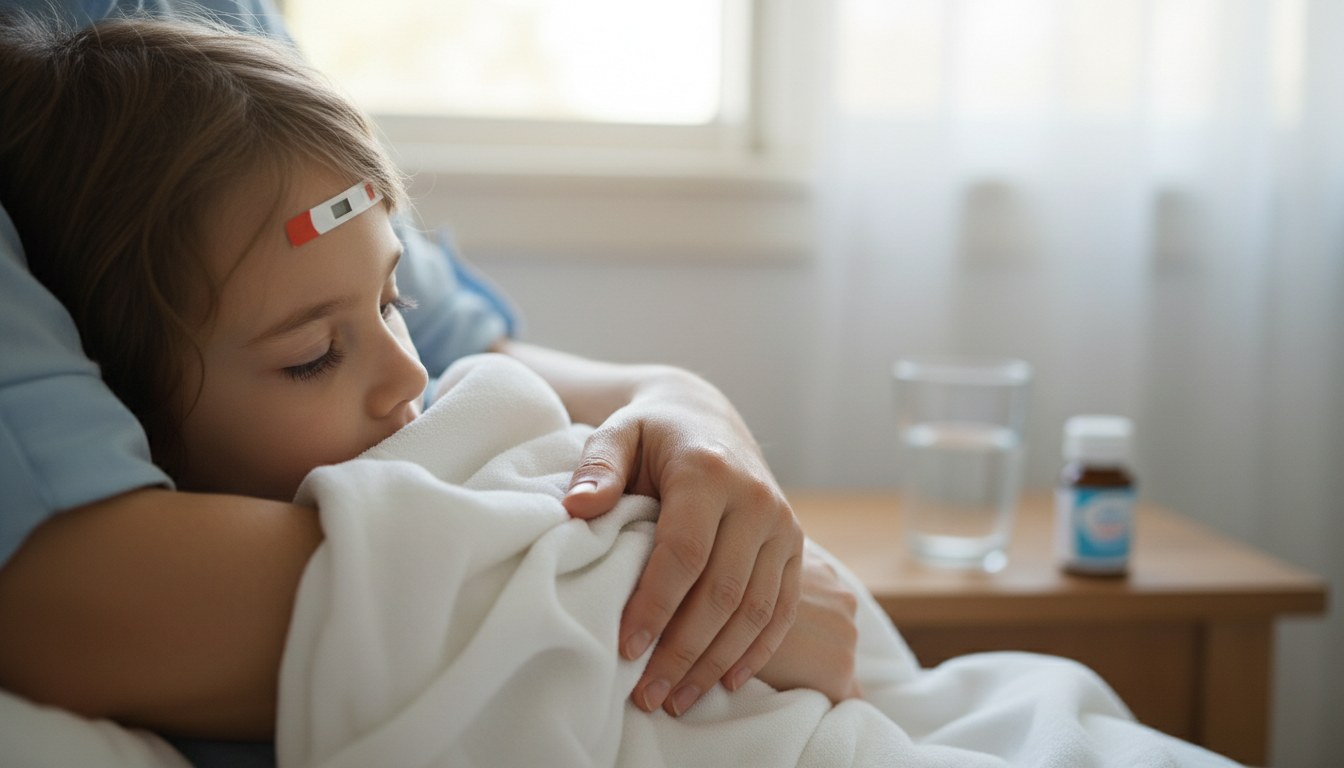
Fever is one of the most common reasons parents seek medical care for children, and one of the most frequently misunderstood. Fever is not a disease; it is a physiological defense response.
Written By: DocAi Health Editorial Team
Last Updated: 2026-07-15
Medically Reviewed By: DocAi Health Medical Review Team
Fever is one of the most common reasons parents seek medical care for children, and one of the most frequently misunderstood. Fever is not a disease; it is a physiological defense response. When the immune system detects infection, the hypothalamus raises the body's temperature set point, creating an environment that is less hospitable to pathogens, while enhancing immune cell function and accelerating inflammatory processes that fight infection. For most children, fever is beneficial and should be managed for comfort, not eradicated. Knowing when to monitor at home and when to seek immediate care is the most important knowledge any parent can have.
What Counts as Fever?
A rectal temperature of 100.4°F (38°C) or above is considered fever. This threshold is important, especially for infants under 3 months, where any fever requires immediate medical evaluation.
| Method | Normal | Fever Threshold | Notes |
|---|---|---|---|
| Rectal | 36-38°C (96.8-100.4°F) | ≥38°C (100.4°F) | Most accurate; gold standard in infants |
| Oral | 35.5-37.5°C (95.9-99.5°F) | ≥37.8°C (100°F) | Accurate in children 5+; avoid if just had hot drink |
| Axillary (armpit) | 35-37°C (95-98.6°F) | ≥37.2°C (99°F) | Least accurate; for screening only |
| Tympanic (ear) | 35.8-38°C (96.4-100.4°F) | ≥38°C (≥100.4°F) | Accurate if used correctly; can be unreliable in young infants |
| Temporal artery | 36.4-37.4°C (97.5-99.3°F) | ≥38°C (≥100.4°F) | Increasingly reliable with modern devices |
Age-Based Approach to Fever
Under 3 Months, Always Seek Immediate Care
Any rectal temperature ≥100.4°F (38°C) in an infant under 3 months is a medical emergency until proven otherwise. Young infants have immature immune systems that cannot contain serious bacterial infections (sepsis, meningitis, urinary tract infection) in the same way older children can. These infections can progress rapidly with few external signs. Evaluation, including blood cultures, urine culture, and often lumbar puncture, is the standard of care. Do not give fever-reducing medication first and then check, it can mask fever and delay critical evaluation. Call your pediatrician immediately or go to the emergency room, do not wait to see if the fever improves on its own.
3-6 Months
Fever in this age group is less immediately alarming than under 3 months, but medical evaluation is still generally recommended, particularly if the temperature is ≥39°C (102.2°F), the infant appears ill, or there is no obvious source (like a runny nose). A well-appearing, immunized infant over 3 months with a low-grade fever and mild cold symptoms can often be monitored closely at home with clear phone guidance from the pediatrician.
6 Months to 2 Years
Fever is very common in this age group, viral upper respiratory infections are the most frequent cause. A fever under 40°C (104°F) in a well-appearing child with identifiable illness (cold, mild flu) can typically be managed at home. The child's behavior and appearance matter much more than the number: a child playing, maintaining hydration, and responsive to fever reduction is reassuring.
Older Children (2-12 Years)
The same principles apply, behavior and appearance are the key indicators. The height of the fever alone (within the range of 38-40°C) is less important than how the child looks and acts. A 40°C (104°F) fever in a child who drinks juice, plays calmly on the couch, and brightens when the fever comes down is far less concerning than a 38.5°C (101.3°F) fever with stiff neck, severe headache, or extreme lethargy.
When to Seek Medical Care
Emergency, Call 911 or Go to the ER Immediately (Any Age)
- Any fever in an infant under 3 months
- Stiff neck, difficulty bending chin to chest (meningitis sign)
- Non-blanching rash, purplish-red spots that do NOT fade when pressed with a glass (meningococcal septicemia)
- Extreme lethargy or unresponsiveness, difficult to wake, not making eye contact
- Difficulty breathing or unusually rapid breathing
- Persistent vomiting or signs of severe dehydration (no wet diaper for 8+ hours, sunken fontanelle, no tears when crying)
- Fever lasting 5 days or more together with rash, red eyes, red or cracked lips, swollen hands or feet, or swollen neck glands (possible signs of Kawasaki disease)
- Fever above 40°C (104°F), particularly if not responding to fever-reducers
- Severe headache or sensitivity to light
- Child appears very ill in your parental judgment, trust your instincts
If any of these are present, call 911 or go to the emergency room immediately, do not wait for a callback from the pediatrician's office.
See a Doctor Soon, Call Your Pediatrician (Non-Emergency)
- Fever lasting more than 24 hours in a child under 2 years old
- Fever lasting more than 3 days (72 hours) in a child 2 years or older
- Fever that returns after being gone for 24 hours
- Fever accompanied by a specific symptom that isn't improving, persistent ear pain, sore throat, poor feeding, or decreased urination
- Any fever in a child with an underlying chronic illness or a weakened immune system
Call during office hours or use the after-hours nurse line. These situations warrant medical guidance but are not typically 911/ER emergencies on their own.
Common Causes of Fever in Children
Viral infections: The vast majority of childhood fevers (>85%) are caused by viruses, rhinovirus (common cold), influenza, RSV, adenovirus, enteroviruses, roseola, fifth disease, COVID-19. These typically run 3-5 days and resolve without antibiotics.
Ear infection (otitis media): One of the most common bacterial causes in young children, often follows a viral upper respiratory infection. Child may pull at ear, but this is not reliable in infants.
Urinary tract infection (UTI): Can present with fever alone in young children without the classic urinary symptoms seen in older children and adults. Should be considered in any child with unexplained fever.
Strep throat: Common in school-age children. Diagnosis confirmed by rapid strep test or throat culture; requires antibiotic treatment.
Post-vaccination fever: Common 1-3 days after many childhood vaccines (particularly MMR, DTaP). Usually mild and self-limiting, appropriate to treat for comfort.
Managing Fever at Home
The goal is comfort, not necessarily eliminating fever entirely. The most important things: keep the child hydrated, monitor for red flags, and treat for comfort if the child seems uncomfortable.
Acetaminophen (Tylenol): Acetaminophen can be used in infants, but under 3 months only give it on the advice of a doctor. Follow the dosing on the package label for your child's weight and age, or as directed by your pediatrician or pharmacist, and always measure with the dosing device that comes with the product.
Ibuprofen (Advil, Motrin): Do not give ibuprofen to infants under 6 months. Follow the dosing on the package label for your child's weight and age, or as directed by your pediatrician or pharmacist, and always measure with the dosing device that comes with the product. Slightly more potent and longer-lasting than acetaminophen. Avoid in children with kidney problems, dehydration, or chickenpox.
Do NOT use aspirin in children with viral illness, associated with Reye syndrome (rare but serious liver and brain condition).
Lukewarm sponging: Can provide temporary comfort but does not address the fever-setting mechanism and is not a substitute for medication. Cold water or alcohol sponging should be avoided.
Encourage fluids: Breastmilk or formula in infants, water, diluted juice, popsicles, broth. Dehydration, not fever itself, is the primary complication to prevent.
Frequently Asked Questions
Does a higher fever mean a more serious illness?
Not necessarily. The height of a fever does not reliably indicate severity. A child with 40°C (104°F) from a viral infection can look well and recover fully, while a child with 38.5°C (101.3°F) bacterial meningitis can be critically ill. How the child looks and behaves, not the number, is the most important indicator. A child who brightens and plays when the fever comes down is reassuring; a child who remains extremely lethargic even with fever reduction is concerning.
Can fever cause brain damage?
Fever from infection does not cause brain damage, this is a common fear but a myth. The brain begins to be at risk only at temperatures above 41-42°C (106-107.6°F), which is extremely rare from infection alone. Brain damage in the setting of serious infections (meningitis, encephalitis) is caused by the infection itself attacking brain tissue, not by the fever.
What is a febrile seizure?
Febrile seizures are seizures triggered by fever, occurring in 2-5% of children between 6 months and 5 years. They are terrifying to witness but are usually brief, self-limiting, and benign, they do not cause brain damage and do not increase the risk of epilepsy in most cases. Simple febrile seizures (under 15 minutes, generalized) typically require only reassurance and monitoring. A child who has a febrile seizure should be evaluated by a provider, but most do not require hospital admission.
Should I alternate acetaminophen and ibuprofen?
Alternating the two every 3-4 hours can provide more consistent fever and discomfort management in a child who is very uncomfortable, and is considered safe by most pediatric guidelines. However, it also increases the complexity of dosing and the risk of medication errors. In practice, either medication alone is sufficient for most children. If alternating, keep a written log of each dose, timing, and medication to avoid accidental double-dosing. If you suspect your child has received too much acetaminophen or ibuprofen, call Poison Control at 1-800-222-1222 (US) or go to the ER right away.
When is a fever high enough to go to the ER?
For children over 3 months, the fever height alone (without other alarming symptoms) is not an ER threshold. A well-appearing child with 40.5°C (104.9°F) who is drinking, responsive, and improving with medication does not need the ER. Any of the emergency red-flag symptoms listed above, regardless of fever height, warrant a call to 911 or a trip to the ER. When in doubt, call your pediatrician's after-hours line, most can help you determine urgency over the phone.
Related Articles:
Common Childhood Rashes: A Visual Guide |
Ibuprofen vs. Acetaminophen: Which Is Safer for Your Child? |
Understanding a Child's Complete Blood Count (CBC) |
Causes of Abdominal Pain in Children
Sources
- American Academy of Pediatrics (AAP): Fever and your child. healthychildren.org
- CDC: Fever, guidance for parents and caregivers.
- MedlinePlus (National Library of Medicine, NIH): Fever in children.
- Mayo Clinic: Fever, first aid and when to seek care.
- National Institute of Child Health and Human Development (NICHD, NIH): Childhood fever management.