Albuterol Inhalers: Uses, Side Effects, and Inhaler Technique
Albuterol (also known as salbutamol outside the United States; brand names include ProAir, Ventolin, Proventil) is a short-acting beta-2 agonist (SABA) bronchodilator, the most commonly used "rescue inhaler" for asthma
Written By: DocAi Health Editorial Team
Last Updated: 2026-07-15
Medically Reviewed By: DocAi Health Medical Review Team
Albuterol (also known as salbutamol outside the United States; brand names include ProAir, Ventolin, Proventil) is a short-acting beta-2 agonist (SABA) bronchodilator, the most commonly used "rescue inhaler" for asthma and COPD. It works within minutes to relieve airway constriction and is considered a first-line treatment for acute breathing difficulty. Understanding how and when to use it, correct inhaler technique, and its limitations helps patients manage respiratory conditions more safely.
What Albuterol Is Used For
Asthma rescue treatment: Albuterol is the standard rescue inhaler for acute asthma symptoms, wheezing, chest tightness, shortness of breath, and coughing. It is used for quick relief during flare-ups.
Exercise-induced bronchoconstriction (EIB): Taking one or two puffs 15-30 minutes before exercise prevents exercise-triggered airway narrowing in susceptible individuals.
COPD exacerbations: Used as a rescue bronchodilator during COPD flare-ups to relieve acute breathlessness and airflow obstruction.
Nebulized albuterol: The same drug can be delivered via a nebulizer (machine that turns liquid medication into a mist) for more severe exacerbations or in patients who cannot use a standard inhaler (e.g., very young children, severe attacks).
How Albuterol Works
Albuterol is a selective beta-2 adrenergic receptor agonist. Beta-2 receptors are found predominantly in bronchial smooth muscle. When activated, these receptors trigger relaxation of the smooth muscle surrounding the airways, causing bronchodilation, widening of the airways. This effect begins within 3-5 minutes and lasts 4-6 hours. Albuterol does not reduce airway inflammation, it only relieves the muscular constriction component of an asthma attack.
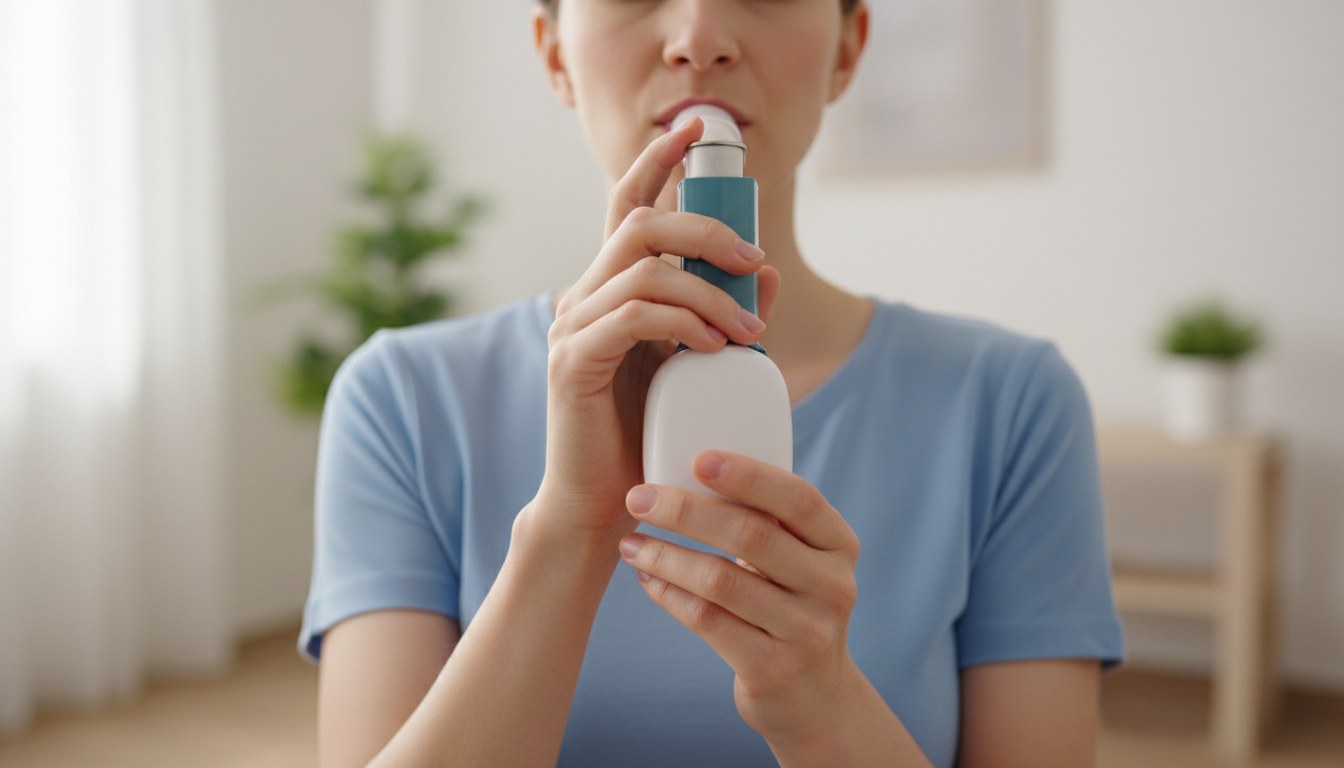
Correct Metered-Dose Inhaler (MDI) Technique
Many patients use their inhaler incorrectly, significantly reducing the amount of medication that actually reaches the lungs. The correct steps:
- Shake the inhaler vigorously for 5 seconds (for shake-type inhalers).
- Remove the cap and check the mouthpiece for debris.
- Exhale fully to empty your lungs.
- Place the mouthpiece in your mouth, forming a tight seal with your lips.
- Begin a slow, deep inhalation and simultaneously press the canister once.
- Continue inhaling slowly and deeply for 3-5 seconds.
- Hold your breath for 10 seconds to allow medication to settle in the airways.
- Exhale slowly. If a second puff is needed, wait 1 minute between puffs.
Spacer device: Using a spacer (a tube attached to the inhaler) is strongly recommended for MDIs, especially for children and anyone who struggles to coordinate the press-and-inhale motion. Spacers significantly increase medication delivery to the lungs and reduce oropharyngeal deposition.
Common Side Effects
Tremor (Shakiness)
The most common side effect, a fine tremor, typically in the hands, resulting from beta-2 receptor stimulation in skeletal muscle. Usually mild and short-lived (30-60 minutes after dosing). More noticeable at higher doses or with repeated use.
Rapid Heartbeat (Tachycardia) and Palpitations
Beta-2 stimulation can cause a temporary increase in heart rate. This is usually mild and self-limiting. Patients with underlying heart conditions should discuss this with their provider.
Headache and Dizziness
Occasional side effect, typically mild. Dizziness can also result from hyperventilating during an attack.
Hypokalemia (Low Potassium)
High-dose or frequent albuterol use (such as during severe asthma attacks in the ER) can shift potassium into cells, lowering blood potassium. This is clinically significant in severe attacks managed in medical settings and is monitored in hospitalized patients.
Overdose or Accidental Double-Dosing
Taking far more than the prescribed number of puffs (for example, a young child getting into an inhaler, or repeated dosing beyond what a provider directed) can cause significant tremor, a very fast or irregular heartbeat, chest pain, and low potassium. If you suspect an albuterol overdose, call Poison Control at 1-800-222-1222 (US) or go to the ER, do not wait for symptoms to worsen. If someone has collapsed, is having a seizure, or is unresponsive, call 911 immediately.
Rescue vs. Controller: An Important Distinction
Albuterol is a rescue medication, it treats symptoms but does not treat the underlying airway inflammation in asthma. Using albuterol more than twice per week for symptoms indicates that asthma is not well-controlled and that a controller medication (typically an inhaled corticosteroid like fluticasone or budesonide) should be added or optimized. Relying on albuterol alone for frequent symptoms is associated with worse asthma outcomes and increased risk of severe attacks.
When to Seek Medical Care
Emergency, Call 911 or Go to the ER Immediately
Call 911 or go to the emergency room immediately if:
- Your rescue inhaler does not improve breathing within 15-20 minutes.
- Breathing is rapidly getting worse, or you feel short of breath even at rest.
- You cannot speak in full sentences due to breathlessness.
- Lips or fingernails are turning bluish (cyanosis).
- You feel you cannot get enough air despite repeated inhaler use.
- You have sudden or severe chest pain, a racing/irregular heartbeat with dizziness, or you faint or lose consciousness.
- You suspect an albuterol overdose with collapse, seizure, or unresponsiveness.
Do not wait for a second dose to work if any of these signs are present.
See a Doctor Soon, Not an Emergency
Contact your provider or schedule a visit (no need for the ER) if:
- You are using your rescue inhaler more than 2 days per week for symptom relief.
- You are waking at night with coughing, wheezing, or shortness of breath.
- You are refilling your inhaler more often than expected.
- Tremor, jitteriness, or a mildly fast heartbeat lingers well beyond 30-60 minutes after a dose.
- Your usual dose no longer seems to control symptoms as well as before.
Albuterol Overuse: Why Frequent Use Is a Warning Sign
Using a rescue inhaler more than 2 days per week (for asthma) is a key indicator of poorly controlled asthma, per the NAEPP asthma guidelines. Overuse of rescue inhalers, without addressing underlying inflammation, has been associated with increased emergency visits and hospitalizations. Track how often you use your rescue inhaler and report increased use to your provider promptly.
Frequently Asked Questions
How do I know when my albuterol inhaler is empty?
Most albuterol inhalers contain a dose counter that shows remaining doses. If yours does not have a counter, track the number of puffs used, most inhalers contain 200 puffs. Do not float the canister in water to check, this is inaccurate and can damage the inhaler. Keep a spare inhaler on hand when the dose count gets low.
Can I use albuterol every day?
Daily use of rescue albuterol for asthma symptoms typically indicates inadequate control. While albuterol is safe for regular use when medically necessary, daily use should prompt a provider visit to reassess the treatment plan, usually adding or adjusting a controller medication. For COPD, daily scheduled bronchodilator use is common and appropriate with longer-acting agents.
Does albuterol make asthma worse over time?
Albuterol itself does not worsen asthma physiology. However, using rescue inhalers as a substitute for controller therapy, rather than alongside it, is associated with worse outcomes because the underlying inflammation driving asthma is not being treated.
Is albuterol the same as a steroid inhaler?
No. Albuterol is a bronchodilator (relaxes airway muscles), it is not a steroid. Steroid inhalers (inhaled corticosteroids like fluticasone, budesonide) reduce airway inflammation and are controller medications used daily to prevent symptoms. Most asthma patients with persistent symptoms need both: a controller steroid inhaler and a rescue bronchodilator like albuterol.
My child has a nebulizer prescription for albuterol, is it the same as the inhaler?
Yes, it is the same drug, just delivered differently. Nebulized albuterol is the same medication converted to a mist breathed in over 5-15 minutes. Nebulizers are often used for young children who cannot use an MDI, or for more severe attacks requiring higher doses. An MDI with a spacer and mask attachment is equally effective for children 4 and older when used correctly.
Related Articles:
Causes of Shortness of Breath |
Causes of Persistent Cough |
Causes of Chest Pain |
Causes of Night Sweats
Sources
- FDA: Albuterol sulfate inhaler prescribing information.
- MedlinePlus (National Library of Medicine, NIH): Albuterol inhalation.
- National Heart, Lung, and Blood Institute (NHLBI): Asthma guidelines (NAEPP EPR-3).
- Centers for Disease Control and Prevention (CDC): Asthma, guidance for patients.
- Mayo Clinic: Albuterol inhalation route, side effects and precautions.
- Global Initiative for Asthma (GINA): 2023 asthma management guidelines.